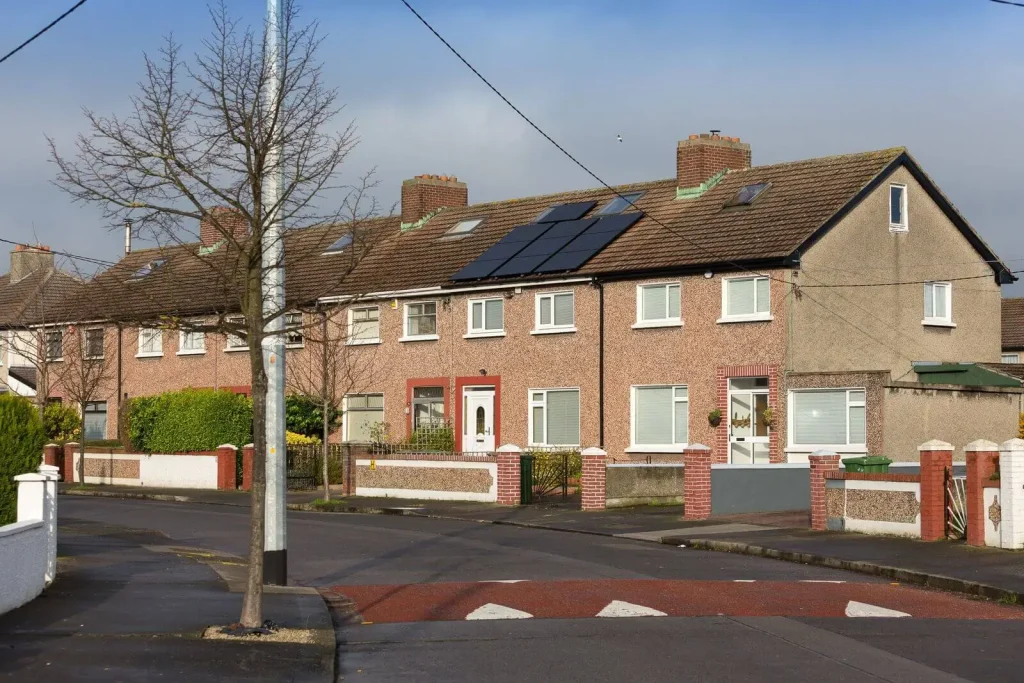

No SEAI grant exists for pensioners as a group. SEAI grants for pensioners are decided by two things, the welfare payment you receive and the age of your house. Being 66, 70 or 80 changes neither of them.
The detail that catches most people out is the State Pension. It is not one of the qualifying welfare payments. Fuel Allowance is, and most older homeowners on a modest income already receive it.
October 2026 moved the goalposts in a way that helps this group in particular. Solar panels and a battery were added to the fully funded scheme, a separate battery grant opened, and the house age rule was relaxed.
What Changed in SEAI Home Energy Grants on 6 October 2026
Three changes went live on 6 October 2026, announced by Government on 29 September. Solar PV up to 4 kWp and a 5 kWh battery are now offered as standard under the fully funded Warmer Homes Scheme, and a new €600 grant opened for home batteries of 5 kWh or larger.
The third change is the house age rule. The solar electricity grant now covers homes built and occupied before 2025, where the cut-off had been 2021, which brings thousands of newer properties into the scheme for the first time.
- Fully funded solar PV and battery added to the Warmer Homes Scheme
- New €600 grant for batteries of 5 kWh or larger
- Solar PV and solar thermal grants extended to homes built before 2025
- Enhanced grants of up to €9,000 for homeowners on qualifying welfare payments
- A €2,000 boiler scrappage grant for homes moving off oil or gas
What Decides SEAI Grants for Pensioners in Ireland
Two tests decide everything. The first is whether you receive one of the qualifying Department of Social Protection payments. The second is when your home was built and occupied. Age is not a test at either stage.
That is why two neighbours of the same age can get very different answers. One on Fuel Allowance in a 1978 bungalow may qualify for a fully funded upgrade. One on the State Pension alone in the same estate gets the standard grant that is open to every homeowner.
So the useful question is never whether there is a grant for over 70s. It is which payment is in your name, and what year the ESB meter went into your house.
Which Welfare Payments Qualify for SEAI Grant Support
Seven payments open the door to the higher grant rates and the fully funded scheme. The one most older homeowners come in on is Fuel Allowance under the National Fuel Scheme, which carries no extra condition.
- Fuel Allowance as part of the National Fuel Scheme
- Working Family Payment
- One-Parent Family Payment
- Domiciliary Care Allowance
- Carer’s Allowance, where you live with the person you care for
- Jobseeker’s Allowance for over six months, with a child under seven
- Disability Allowance for over six months, with a child under seven
From age 66 you can claim Fuel Allowance on a means test alone, with no other welfare payment needed. Budget 2027 raised both parts of it. The weekly rate goes from €38 to €43 in January 2027, and the Fuel Allowance income limit for a single person aged 66 or over rises from €534 to €640.80 a week, so some people previously just over the line will now pass it.
One common mix-up is worth clearing up. The Household Benefits Package, which many over 70s receive, is a different payment and does not appear on the qualifying list.
SEAI Grants for Over 70s and the Three Routes to Solar

Three routes exist, and your payment and your build date decide which one applies. The fully funded route pays for everything. The enhanced route pays most of it. The standard route is open to every homeowner with an eligible house.
| Route | What it covers | Conditions |
| Warmer Homes Scheme | Fully funded upgrade, including solar PV up to 4 kWp and a 5 kWh battery | Owner-occupied, built and occupied before 2006, BER of C or lower, qualifying payment |
| Enhanced SEAI grant | Up to €8,400 for solar PV plus €600 for a battery, €9,000 maximum | Built and occupied before 2025, qualifying payment |
| Standard SEAI grant | Up to €1,800 for solar PV plus €600 for a battery, €2,400 maximum | Built and occupied before 2025, no payment needed |
Fully Funded Solar Under the Warmer Homes Scheme
The Warmer Homes Scheme costs you nothing and now includes solar as standard. SEAI manages the survey, the contractor and the work. Alongside solar and a battery, it covers insulation, draught-proofing, ventilation and heating upgrades where the survey recommends them.
To qualify you must own and live in the home, receive one of the seven payments, and the house must have been built and occupied before 2006 with a BER of C or lower. The Warmer Homes Scheme eligibility rules also set the priority order, with homes built before 1993 rated E, F or G going to the front of the queue.
The trade-off is time. Applicants can currently expect contractor contact around 15 months after applying.
Enhanced SEAI Grant of up to €9,000 for Welfare Recipients
If you receive a qualifying payment but your home was built after 2006, the enhanced grant is your route. It pays up to €8,400 towards solar panels and a further €600 towards a 5 kWh battery, capped at €9,000 in total.
The rate is tiered. SEAI pays €3,350 for each of the first 2 kWp, then €850 for every kWp after that up to 4 kWp. A 2 kWp system attracts €6,700, a 3 kWp system €7,550, and a 4 kWp system the full €8,400.
You apply through the same SEAI portal as everyone else, with no separate form. The house must have been built and occupied before 2025 and must not have had previous SEAI funding for the same measure.
Standard SEAI Solar Grant of up to €2,400 for Everyone Else
Nobody is shut out. If you are on the State Pension with no qualifying payment, or your house falls outside the Warmer Homes dates, the standard grant still applies. It pays up to €1,800 for solar panels and €600 for a battery of 5 kWh or larger, so €2,400 at the top end.
The panel element is tiered in the same way, at €1,400 for 2 kWp, €1,600 for 3 kWp and €1,800 for 4 kWp. Where a battery is installed with panels, 0% VAT applies to the supply and installation, which takes more off the final bill than people expect. A solar calculator will give you a rough system size before you speak to anyone.
How Build Date Decides SEAI Grants for Old Houses
Build date is the gate, and it has three different settings. SEAI grants for old houses turn on when the property was built and occupied, which is confirmed by the ESB meter connection date rather than by anything on the deeds.
- Before 2006, with a qualifying payment and a BER of C or lower, opens the fully funded Warmer Homes Scheme
- Before 2025 opens the solar PV, solar thermal and battery grants, standard or enhanced
- Before 2011 applies to the individual insulation and heating control grants
Older housing stock usually benefits most, because a draughty, poorly insulated house has further to climb. If you are weighing solar against insulation first, the survey will normally point you at the fabric of the building before the roof.
Other SEAI Grants Worth Checking Alongside Solar

Solar is rarely the only grant on the table for an older home. If you receive a qualifying payment and are not going down the Warmer Homes route, higher flat-rate grants apply to insulation, reported at €2,500 for attic insulation and €2,300 for cavity wall insulation.
Heating is the other one to look at. A €2,000 boiler scrappage grant opened on 6 October 2026 for homeowners replacing a fossil fuel boiler as part of a heat pump upgrade, on top of the existing heat pump grant.
For most older homeowners the sensible order is insulation, then heating, then solar. Panels on a cold house still generate, but the savings land harder once the heat stays in.
How to Apply for SEAI Grants as a Pensioner
Apply in sequence, because approval has to be in place before any work starts. Claiming Fuel Allowance first is often the single step that changes which route you are on.
- Check whether you receive one of the seven qualifying payments, and apply for Fuel Allowance if you are 66 or over and within the means limit.
- Confirm the year your home was built and occupied.
- Apply to SEAI directly for the Warmer Homes Scheme if the house predates 2006 and the BER is C or lower.
- For the standard or enhanced grant, apply on the SEAI portal and wait for written approval before anything is ordered.
- Use an SEAI registered contractor, then complete the works within the eight month window and arrange the post-works BER.
The order matters at step four. Work carried out before approval arrives is not eligible, no matter who did it. A registered installer of solar panels for homes will normally handle the paperwork and the grant submission as part of the job, which removes most of the admin.
Age will never be the thing that qualifies or disqualifies you. The payment in your name and the year on your meter connection will.
If you are not sure which of the three routes you fall into, the quickest way to find out is a short conversation about your home and your payments. Get in touch for a free assessment and we will tell you straight which grant applies.
 Is there a special SEAI grant for pensioners or over 70s?