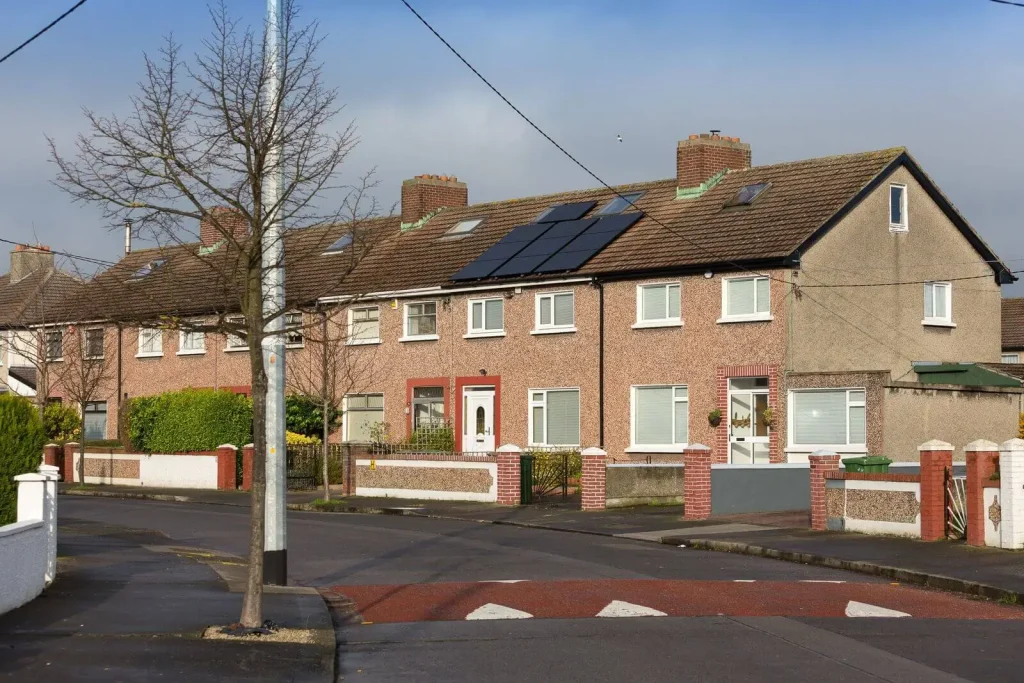

Yes, newer homes now qualify. From 6 October 2026, SEAI grants for new builds cover any home built and occupied before 2025, so 2021, 2022, 2023 and 2024 properties are eligible for the first time.
The old rule capped eligibility at homes built and occupied before 2021. That single date excluded four full years of Irish housing stock, including thousands of estate homes handed over during and after the pandemic building surge. Those owners applied, were refused, and mostly stopped asking.
Grant amounts did not change. What changed is who can claim them, and the practical questions for a newer home are different from the ones an older house faces. Here is what applies now, what still blocks an application, and what to check on a newer roof before anyone starts drilling.
SEAI Grants for New Builds Now Cover Homes Built Up to 2024
Any home built and occupied before 2025 can apply for the solar PV grant, provided it meets the other scheme conditions. The cut-off moved from before 2021 to before 2025 when SEAI’s application portal reopened on the evening of 6 October 2026. Homes first occupied in 2025 or later are still outside the scheme.
The same date change applied to the solar water heating grant.
A quick way to place your own home is the occupancy date rather than the build date. SEAI generally treats this as the date the electricity meter was first installed and the house was lived in, not the date planning was granted or the foundations went down. If your meter went live in late 2024 and you moved in that December, you are inside the window.
SEAI Solar PV and Battery Grant Amounts in 2026
Grant values are unchanged by the October 2026 update. Solar PV pays €700 per kWp for the first 2 kWp and €200 for every additional kWp up to 4 kWp, capped at €1,800. A separate €600 grant covers a battery of 5 kWh or larger, taking the maximum combined support to €2,400.
| Measure | Grant value |
| Solar PV, first 2 kWp | €700 per kWp |
| Solar PV, each extra kWp up to 4 kWp | €200 per kWp |
| Maximum solar PV grant | €1,800 |
| Battery of 5 kWh or larger | €600 |
| Maximum combined | €2,400 |
The grant is paid pro rata, so a 2.5 kWp array draws €1,500 and a 3 kWp array draws €1,600. A battery under 5 kWh gets nothing, which matters because some smaller hybrid packages sit just below the threshold. Current values and worked examples are published on SEAI’s solar electricity grant page, which is the figure to check on the day you apply.
Solar PV and battery can go on one application if you are installing both together.
Conditions That Still Apply to Newer Homes
Everything apart from the age rule stayed the same. Widening eligibility did not relax any of the scheme’s other requirements, and a newer home has to clear exactly the same checks as a 1990s bungalow.
- The property needs an MPRN, so an off-grid home does not qualify.
- No solar PV grant can have been paid previously at that MPRN.
- The work must be done by an SEAI-registered solar PV company, with the electrical side signed off by a Safe Electric registered electrician.
- Grant approval must be in writing before any work starts. Works begun early are disqualified outright.
- A post-works BER assessment must be published before the grant is paid.
- You have 8 months from approval to finish the job and submit the Declaration of Works.
That prior-funding condition catches a few newer homes. Developer-fitted panels installed to meet building regulations were not SEAI-funded, so they do not usually block an application, but if any SEAI solar funding was ever drawn at your MPRN the door is closed. Citizens Information sets out the qualifying conditions in plain terms if you want a second reference before applying.
Checked Eligibility Before and Got Turned Down? What Changed
If you were refused on the age rule alone, you can now apply. A refusal based on the pre-2021 cut-off was correct at the time and is simply out of date. There is no appeal process to reopen, no reference number to quote, and no waiting list. You start a fresh application.
Three things are worth knowing before you do.
- Grant rates are set at the date you create the application, not the date you first enquired.
- If you already hold an approved solar PV application and now want the battery grant too, you submit a separate battery application rather than amending the first one.
- Approval must land before installation, even if your installer is ready to go next week.
Most of the homeowners affected by this change are in estates built between 2021 and 2024, often with south or west-facing roofs that were never assessed because the answer was no.
What to Check on a New Build Roof Before Installing Solar
Check your structural guarantee first. Most new homes in Ireland are sold with a long-term structural warranty, and roof penetrations carried out by a third party can affect cover depending on the terms of your policy. A short email to the warranty provider or the builder before the survey costs nothing and settles it.
Other newer-home factors that shape the quote:
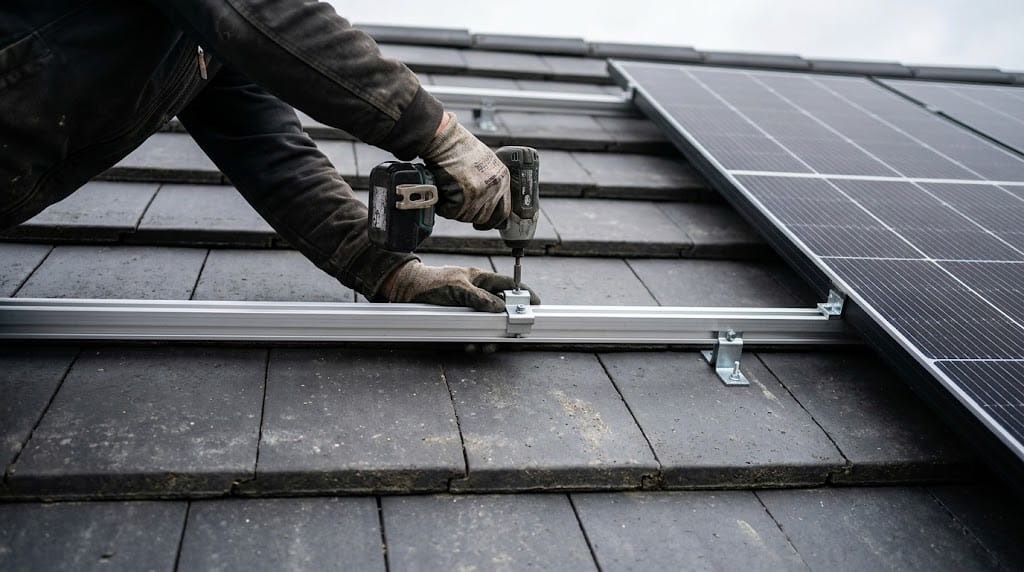
- Roof finish. Flat concrete tiles and some profiled finishes need specific mounting kits, which installers price differently.
- Attic conversions and storage. Trusses and insulation depth affect cable routing and inverter siting.
- Existing solar. Some developments were handed over with a small developer-fitted array to satisfy building regulations. Expanding one of those is a different job from a bare roof, so say so at enquiry stage.
- Board approval. In duplexes and managed schemes, the Owner Management Company usually has a say on roof works.
A survey sorts most of this in a single visit, and a specialist in solar panels for homes will flag anything unusual about a newer roof build-up before a quote is issued.
How Solar Affects BER and Bills in a Newer Home
Expect a real bill saving and a modest BER movement. A home built to recent Part L standards already carries a strong rating, so adding 4 kWp lifts it less than the same array would lift a 1970s house. The electricity you stop buying from the grid is unaffected by that.
This is where newer-home owners get oversold, so the honest version matters. If your home is already A3 or thereabouts, solar is a bill decision rather than a rating decision. Run your own figures through a solar calculator before you compare quotes, using your actual annual kWh from a recent bill rather than a national average.
A battery changes the arithmetic more than extra panels do in a well-insulated home, because daytime generation often exceeds daytime demand when the house is empty.
How to Apply for the Solar PV Grant on a 2021 to 2024 Home
Pick your installer first, then apply. The application names the company doing the work, so the order matters. Changing installer later means cancelling and reapplying, and the grant rate resets to whatever applies on the new application date.
- Get quotes from SEAI-registered companies and confirm system size in kWp.
- Create your application on the SEAI portal and wait for the Letter of Offer by email.
- Let your installer submit the NC6 connection application to ESB Networks, which typically takes at least four weeks.
- Have the system installed, then book the post-works BER straight away.
- Your installer uploads the Declaration of Works and supporting documents, and payment follows in roughly four to six weeks.
Do not let anyone start work on the strength of a verbal approval. That one mistake costs the full grant and cannot be undone.
 Can I get the SEAI solar grant if my house was built in 2023?