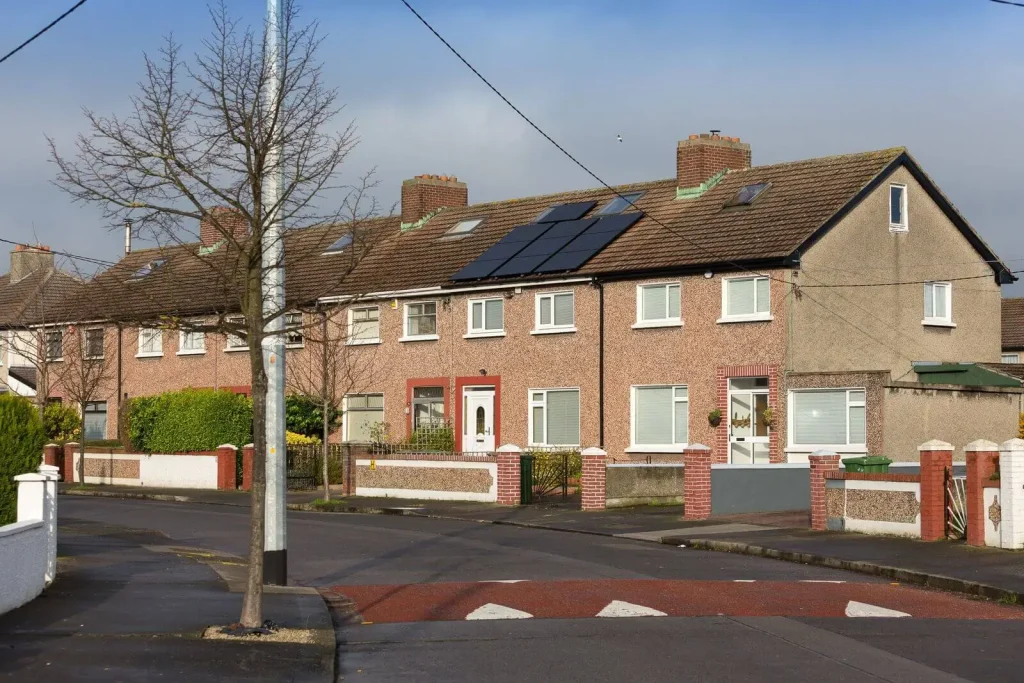

Since 6 October 2026, the Warmer Homes Scheme covers solar PV of up to 4 kWp and a 5 kWh battery at no cost to the homeowner, and the Solar PV for Medically Vulnerable Scheme does the same for eligible households.Fully funded solar panels are now real in Ireland, but only through two SEAI schemes. Searches for free solar panels in Ireland used to end in disappointment. That has changed, for a specific group of people.
Everyone else still has two grant routes worth knowing about. Homeowners on certain Department of Social Protection payments can now claim up to €9,000 towards solar and a battery while picking their own installer. Every other eligible household falls back on the standard SEAI grant of up to €1,800 for solar, with €600 available for a battery.
The confusing part is that these four routes have different eligibility rules, different amounts, and crucially different levels of control over who does the work. Here is how each one works and which one applies to you.
Who Gets Free Solar Panels in Ireland From 6 October 2026
Two groups get solar fully funded. The first is homeowners who qualify for the Warmer Homes Scheme, which now includes solar PV up to 4 kWp and a 5 kWh battery as standard. The second is households eligible under the expanded Solar PV for Medically Vulnerable Scheme.
Both are 100% funded, with no contribution from the homeowner.
Everyone outside those two groups pays something. The government announced the package on 29 September 2026 and the measures opened on 6 October, as set out in SEAI’s announcement of the enhanced grants. Nothing in it makes solar free for the general public.
4 Routes to Grant-Funded Solar Compared

Four separate schemes now support domestic solar in Ireland, and only two of them are free. The table below shows what each one pays and who it is for.
| Route | Solar PV support | Battery support | Who qualifies |
| Warmer Homes Scheme | Fully funded, up to 4 kWp | Fully funded, 5 kWh | Homeowners on a qualifying DSP payment, home built and occupied before 2006 |
| Medically Vulnerable Scheme | Fully funded, up to 4 kWp | 5 kWh included | Eligible medically vulnerable households |
| Enhanced grant for DSP recipients | Up to €8,400 | €600 | Homeowners on a qualifying DSP payment |
| Standard SEAI grant | Up to €1,800 | €600 | Any eligible homeowner or private landlord, home built and occupied before 2025 |
The enhanced route caps at €9,000 once the battery grant is included. The standard route caps at €2,400 on the same basis.
Warmer Homes Scheme Eligibility for Fully Funded Solar Panels
Four conditions decide Warmer Homes eligibility. You must own the property and live in it. It must have been built and occupied before 2006. You must be receiving one of the qualifying social welfare payments. Finally, SEAI must survey the home and find it suitable for the upgrades.
Miss any one of those and the fully funded route closes. Applications go directly to SEAI, not to an installer.
Qualifying Social Welfare Payments for the Warmer Homes Scheme
Seven payments open the door, and you need to be receiving at least one of them:
- Fuel Allowance under the National Fuel Scheme
- Jobseeker’s Allowance for more than 6 months with a child under 7
- Working Family Payment
- One-Parent Family Payment
- Domiciliary Care Allowance
- Carer’s Allowance, where you live with the person you care for
- Disability Allowance for more than 6 months with a child under 7
Income alone does not qualify anybody. A pensioner on the State Pension with no Fuel Allowance, for example, falls outside the scheme despite the age profile most people associate with it.
Why SEAI Chooses Your Upgrades and Your Installer
SEAI controls both decisions on this route, and that catches people out. A home survey determines which measures the property actually needs, so solar is offered where it suits the house rather than on request. SEAI then appoints the contractor who carries out the work.
You cannot nominate your own installer, pick a larger system, or upgrade the specification at your own expense within the scheme. Citizens Information sets out the Warmer Homes process in plain terms if you want to check your position before applying.
Medically Vulnerable Solar PV Scheme Covers 4 kWp and a 5 kWh Battery
The Solar PV for Medically Vulnerable Scheme was expanded on the same date and now provides up to 4 kWp of solar PV with 5 kWh of battery storage, fully funded. It exists for households where electricity supply matters for medical reasons rather than for income reasons.
Eligibility is assessed separately from Warmer Homes. If a household qualifies under both, SEAI will direct the application to the appropriate scheme.
€9,000 Enhanced Solar Grant for Welfare Recipients Who Choose Their Own Installer
Homeowners on a qualifying DSP payment who are not going through Warmer Homes can claim an enhanced grant of up to €9,000. That figure is €8,400 for solar PV plus €600 for a battery of 5 kWh or larger. The enhanced rates are €3,350 per kWp for the first 2 kWp and €850 per kWp for the next 2 kWp.
The rates work out as follows:
- 2 kWp system: €6,700
- 3 kWp system: €7,550
- 4 kWp system: €8,400
This is the route for anyone who wants control. You apply to SEAI yourself, choose your own SEAI-registered solar installer for your home, and the grant is paid to you once the works are signed off. The qualifying payments are the same seven listed above.
Standard €1,800 Solar Panel Grant for Homes Built Before 2025
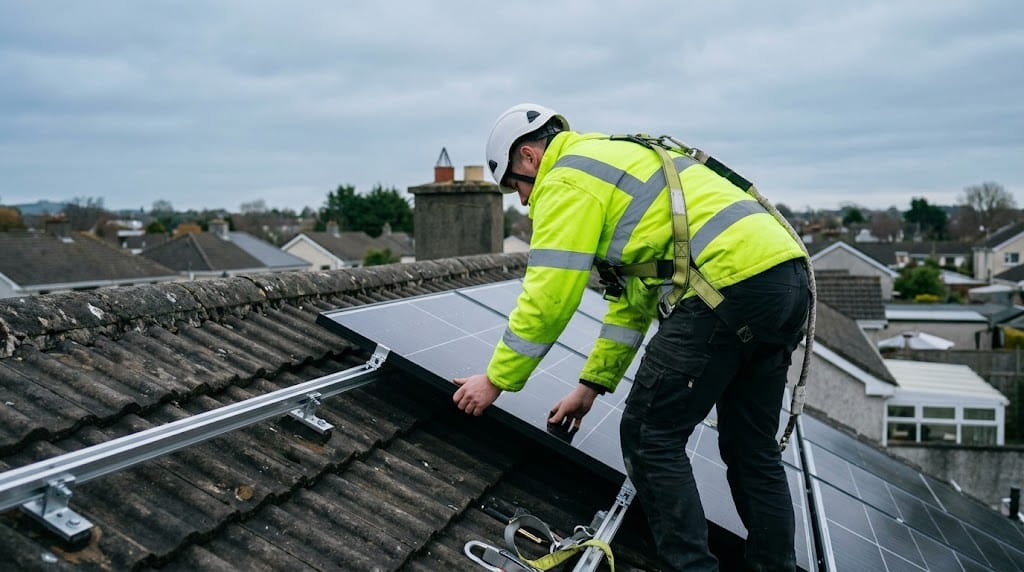
Every other eligible homeowner, including private landlords, claims the standard grant of up to €1,800 for solar PV plus €600 for a battery. No social welfare payment is needed. The rates are €700 per kWp for the first 2 kWp and €200 for each additional kWp up to 4 kWp.
The eligibility change worth noting is the property age. The cut-off moved from homes built and occupied before 2021 to before 2025, which brings a large number of newer houses into the scheme for the first time.
You will still pay the balance yourself, so the real question is payback rather than grant size. Running your numbers through a solar cost calculator gives a working estimate before you commit, and our breakdown of the savings solar actually delivers in Ireland covers what the figures look like over time.[Image: roof-mounted solar PV array on a semi-detached Irish house]
Application Rules That Decide Whether Your SEAI Grant Gets Paid
One rule outranks all the others. Do not start works before you have your grant offer in writing. SEAI will not pay a grant on an installation that began before approval, and there is no appeal on that point.
The rest of the process is straightforward if you follow the sequence:
- Choose an SEAI-registered company and get a written quote.
- Apply to SEAI and wait for your letter of offer.
- Complete the works within 8 months of approval.
- Arrange a post-works BER assessment with a registered BER assessor.
- Submit the Declaration of Works and supporting documents for payment.
Two practical notes. Solar and battery can go on a single application, and an existing solar system does not block a later battery application. Also, if you have already been approved for the standard grant and then realise you qualify for the enhanced DSP route, you can cancel and reapply, provided the works have not started.
Where to Start With Your Solar Grant Application
Check the Warmer Homes and Medically Vulnerable routes first, because nothing else matches a fully funded system. If neither fits, the enhanced €9,000 grant and the standard €1,800 grant both leave you choosing your own installer, which is where quote quality starts to matter.
With over 12,000 systems installed across Ireland since 2012, the team here can walk you through which grant route applies to your property and what the installation involves. Get in touch for a quote and we will confirm your eligibility before anything is committed.
 Are solar panels completely free in Ireland?